
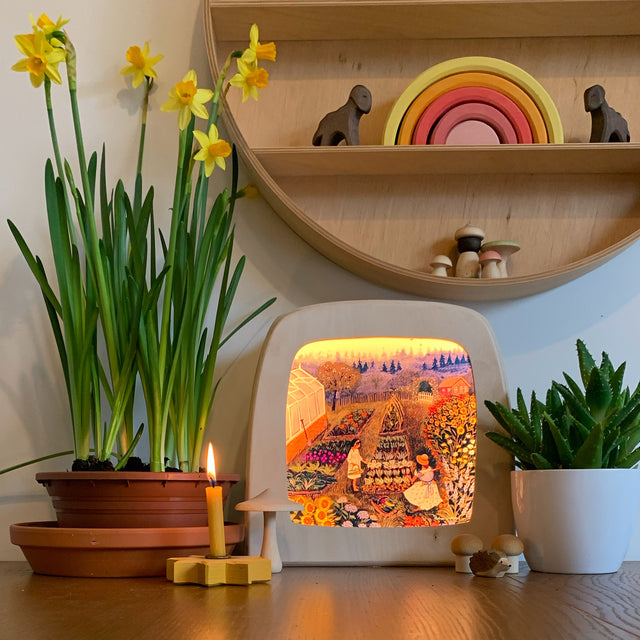

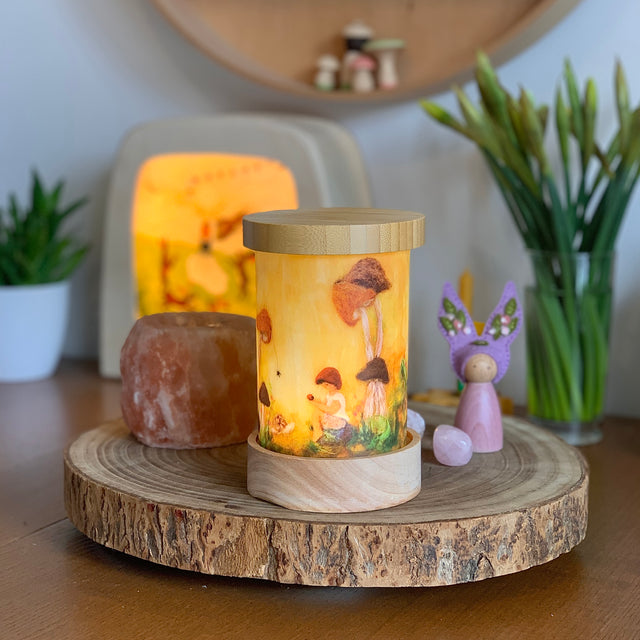





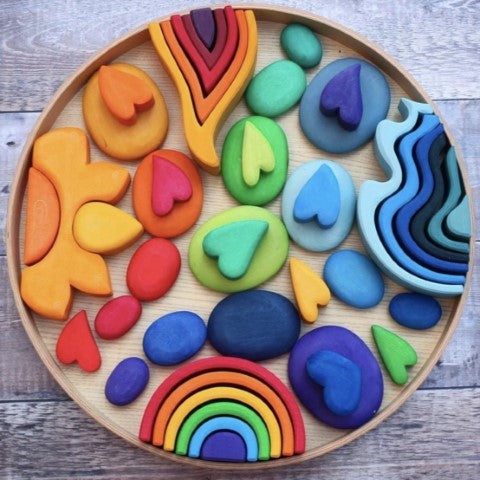


The Power of Open-Ended Play: Celebrating Imagination and the Art of Childhood


When parents first hear about open-ended toys, it’s common to feel a little puzzled, imagining toys that could be anything at all. The heart of the concept is simpler and more beautiful: these are toys that are not defined as being just one single thing, open to a child's imagination and creativity. Through open-ended play, children are gently invited to explore, imagine, and create, shaping each play experience in ways that are uniquely their own.
In a world that often moves too fast, these toys support a slow childhood, where curiosity, attention, and imagination can unfold at a natural pace. By offering children nurturing materials and gentle invitations rather than instructions, open-ended toys encourage a sense of wonder, patience, and creative freedom that carries far beyond the playroom.
Open-ended toys are gentle invitations to wonder, discovery, and creation. They are simple, beautiful toys and materials that spark curiosity and imagination, allowing children to explore and invent in their own unique way. A wooden block, a bundle of play silks, a little wooden animal figure, or even a smooth stone can become a portal to countless stories, each one shaped entirely by the child’s imagination.
These toys do not dictate play or provide instructions; instead, they offer quiet guidance: here is something to hold, to move, to shape, to care for, and the rest is yours to imagine. The texture, weight, and feel of natural materials invite touch and attention, grounding children as they explore. In the stillness of this kind of play, children cultivate patience, joy, and the gentle rhythm of invention, while learning to follow their curiosity, listen to their own ideas, and delight in the endless possibilities of imagination.

Why Child Development Experts Recommend Open-Ended Toys
Child development experts celebrate the quiet, profound magic of open-ended play, because it allows children to explore, experiment, and create at their own pace. Unlike toys with fixed stories or instructions, open-ended toys do not dictate how a child should act or what they should imagine. Instead, they offer space for curiosity to bloom and for problem-solving to arise naturally, often in surprising and delightful ways.
As children engage with these toys, they practice patience, focus, and resilience, learning to trust their own ideas and decisions. The freedom to invent and explore nurtures creativity and problem solving, encourages independent thinking, and fosters emotional intelligence, as children learn to interpret and shape the world around them. Experts note that open-ended play also deepens engagement with materials, the feel of a smooth wooden block, the weight of a hand-carved figure, or the softness of a woolen object connects children to their senses and the present moment. In these quiet, self-directed moments, children cultivate confidence, curiosity, and joy.
How can a truck be open ended?

Imagine a toy fire truck, complete with a ladder, flashing lights, and a siren button, the words 'Fire Department' emblazoned on its side. Its bright colours and printed details tell a very specific story: it is always a fire truck. In a child’s hands, the play follows the lines that have already been drawn.
Now consider a simple wooden truck, painted a gentle red, smooth in the hands, free of labels, buttons and details. In the child’s imagination, this truck can take on countless lives. One moment it is racing to put out a fire, the next it can be the red truck from the beloved story 'Duck in a Truck', hauling duck and his friends across a bridge. It can slowly rumble down the street as a garbage truck, or gently hum along as an ambulance. Its edges are soft, its weight comforting in tiny palms, and it invites touch, movement, and imagination.
This is the essence of open-ended play: the toy does not dictate, it accompanies. It quietly holds space for exploration, imagination, and the creation of stories that are entirely unique to the child’s mind. Each push, roll, or turn is a small act of invention, a gentle celebration of curiosity.
Why is Ostheimer considered 'open ended'?

Consider a classic character toy, like Winnie the Pooh, with his soft round belly, tiny red shirt, and familiar painted face. He is always Pooh, and play with him is shaped by that story, his personality set and known.
Ostheimer figures are intentionally different, they are simple, warm, and open, carved with soft lines and finished to celebrate natural material. A standing bear, for example, could become Winnie the Pooh one day, or Paddington the next, or Little Bear, or any character a child imagines. The smooth wood warms in the hands, the tiny curves and rounded edges invite touch, and the figure’s quiet simplicity offers freedom.
Because Ostheimer figures are so simple in their design, they can fit seamlessly into any child’s beloved story, bringing that story to life in a story basket. In the early years of motherhood, I delighted in creating story baskets for each of my three children’s first birthdays, carefully curating them around favorite books, and even beloved books from my own childhood. It was a quiet delight to share stories that had once enchanted me with my own children, watching them discover the same characters, imagine the same adventures, and feel the magic that had stayed with me all these years.
Slowly collecting together the little Ostheimer animals to match the storybook characters in the months leading up to their birthdays filled me with joy and watching my children explore these figures, arranging and rearranging them, inventing new adventures, and reimagining old favorites, brought the stories to life in ways that were entirely their own. These simple, open-ended figures became cherished companions in storytelling, imagination, and gentle, nurturing play. For the early years, they make some of the most thoughtful, meaningful gifts.
Why Are Waldorf Dolls Open-Ended?

The simpler a doll is, the more characteristics a child can imagine for it. A child can give the doll a name, a voice, and a personality, shaping it to fit the stories and emotions of their own life. Waldorf dolls take this idea further: unlike many traditional dolls, their facial features are intentionally minimal. A pair of gentle eyes and a subtle suggestion of a mouth are all that is needed. Children naturally want to imitate real life. Real babies smile and laugh, but they also cry, and express frustration when hungry or needing comfort. Because the Waldorf doll’s face is open and neutral, a child can imagine it expressing a full range of emotions, exploring feelings like joy, empathy, worry, and tenderness. This simplicity allows the doll to live richly in the child’s imaginative world, becoming a safe companion through which children can practice caring, nurturing, and understanding both their own emotions and those of others.
The Waldorf Philosophy and Open-Ended Play
The Waldorf approach honours the innate wisdom and curiosity of children, trusting that they learn best through rhythm, gentle repetition, and the freedom to explore through imaginative play. In this philosophy, play is a form of learning that unfolds naturally, at a pace guided by the child’s own curiosity and interest.
Materials such as wood, wool, and silk are chosen with care, for their natural textures, warmth, and sensory richness. These materials invite touch, offer comfort, and create a quiet connection between the child and the world around them. Toys in the Waldorf tradition are not instructions or rules; they are invitations. They encourage children to imagine, to care for the objects and for the stories they create, and to weave narratives that are entirely their own.
Open-ended play in this tradition nurtures creativity and problem-solving while supporting emotional depth, patience, and a gentle focus. Children learn to observe, experiment, and reflect, cultivating not only their intellect but also a sense of inner calm and confidence. Through these simple, natural materials and unstructured opportunities for play, children are encouraged to discover the joy of creating, the beauty of quiet exploration, and the freedom of imagination that knows no bounds.

Open-Ended Essentials
Over the years, both as a mother of three, an educator, and a toy shop owner, I have learned just how transformative open-ended toys can be. They offer children the freedom to explore, create, and imagine, supporting not just play, but the development of curiosity, empathy, and problem-solving skills.
From my experience, some toys have consistently captured children’s attention, inspired their storytelling, and encouraged gentle, meaningful engagement. I want to share a few of my favourite open-ended essentials, carefully chosen from years of observing children at play and guiding families in selecting toys that truly nurture creativity. These toys form the foundation of a child’s imaginative world, offering quiet invitations to explore, experiment, and invent, and they are treasures I often recommend again and again to families seeking thoughtful, enduring play experiences.
Open-Ended Play for Under 3s
Open-ended play is just as important for toddlers and young children as it is for older children, offering opportunities to explore textures, colours, shapes, and cause-and-effect relationships. For little ones under three, a thoughtfully chosen set of open-ended toys can spark curiosity and experimentation while supporting early development.
Some favourites I often recommend include:
-
Grapat Object Permanence Box – a beautifully crafted wooden toy that introduces babies and toddlers to cause-and-effect play. With a smooth, lidded box featuring a circular hole and a narrow slot, children can post objects, collect treasures, and explore the idea that things continue to exist even when out of sight. This timeless Montessori-inspired toy encourages curiosity, concentration, and early cognitive development.
-
Play Silks – soft, colourful, and wonderfully open-ended, these sensory toys are perfect for babies and toddlers. They invite peek-a-boo games, can be used with Grapat rings for threading, and encourage exploration through throwing, watching them float, or waving them to music. Play silks spark curiosity, movement, and imaginative play while engaging multiple senses.
-
Grapat Tomtens, Coins, Mates, and Rings – these small, tactile treasures invite little hands to explore, discover, and create. They can be used with the Object Permanence Box for posting, the Tomtens can be placed in and out of the ‘Mates’ rings, and towers can be built with the coins. These versatile pieces also encourage exploration, making them perfect for open-ended, imaginative play.
-
Balls and bowls – simple, timeless objects that little ones love to roll, fill, empty, and explore. Through these basic actions, children experiment with size, shape, and movement while developing coordination and focus. (or another option Balls and Bowls available separately)
- Building Toys – a basic set of wooden blocks like Grimm's Mosaic or Grapat Serendipity offers endless opportunities for stacking, balancing, and experimenting. Little hands delight in exploring how shapes fit together, building towers that tumble, and discovering new ways to create. This kind of open-ended construction play is a favourite activity for toddlers, helping develop problem-solving skills, hand-eye coordination, and a sense of accomplishment.
Together, these items provide a rich foundation for open-ended play, allowing toddlers to explore, experiment, and invent in a safe and stimulating environment. This combination grows with your child, offering endless opportunities for curiosity, creativity, and discovery.
 Building and Construction
For parents beginning their journey into open-ended play, building and construction toys offer a wonderful starting point. They encourage creativity, problem-solving, and fine motor skills, while giving children the freedom to experiment and invent.
A few essentials I often recommend as a starting point include:
-
A basic set of wooden blocks – the Grimm's Mosaic set is perfect for first explorations, stacking, and building simple structures.
-
A larger set of blocks – the Grimm's Large Stepped Pyramid a slightly bigger investment, offering more variety and opportunities for complex creations as children’s confidence grows.
-
Grimms 12-piece rainbow – a classic, versatile piece that can be used for balancing, stacking, imaginative play, and even storytelling.
-
Semi-circles and building boards – these open-ended shapes inspire architectural creativity, bridges, tunnels, and imaginative landscapes.
Together, these pieces form a strong foundation for open-ended play, giving children a starting point that can evolve and expand with their imagination. They are toys I often see becoming treasured favourites, inspiring hours of thoughtful, meaningful play.
 Small World Play
Small world play is a wonderful way for children to bring stories to life, explore relationships, and develop empathy through imaginative scenarios. For those just starting with open-ended play, a simple, carefully chosen set of toys can spark hours of creativity.
I often recommend beginning with:
-
A small selection of Ostheimer Animals – I suggest choosing 2 or 3 that match characters of a favourite story book. By aligning the figures with characters they already love, children are immediately engaged, able to act out familiar stories and invent new adventures.
-
A set of peg people – simple, versatile figures that can interact with the animals and story characters, encouraging imaginative storytelling and role-play.
-
A toy with wheels – something that characters and animals can ride in, adding movement and opening up fresh possibilities for play.
These pieces form a flexible starting point, allowing play to grow naturally as you discover your child’s unique interests and storytelling style. Over time, the set can be added to, creating a rich, evolving small world that continues to inspire imagination and gentle, meaningful engagement.
 Dramatic Pretend Play
Dramatic play allows children to explore emotions, social interactions, and storytelling in a hands-on, imaginative way. For those just beginning with open-ended play, a few carefully chosen essentials can provide endless opportunities for creativity.
-
Play silks – versatile pieces that can become costumes, capes, or props. Their open-ended nature encourages imaginative dress-up, role-playing, and storytelling.
-
A Waldorf doll – a simple, beautifully crafted figure that invites nurturing, interaction, and imaginative scenarios.
-
Open-ended play food – a set like Grapat Yummy, fruits, vegetables or bakes, and plates. These items allow children to invent meals, host tea parties, or create shops, providing rich opportunities for dramatic play.
Starting with these few items gives children a foundation for imaginative exploration. As their stories unfold, new pieces can be added to extend play, supporting creativity, empathy, and problem-solving in a gentle, joyful way.

The Joy of Crossover Play
One of the most wonderful things about open-ended toys is that their use is never confined to a single category of play. A piece of play silk, for example, might begin as a dress-up cape in storytelling and dramatic play, then transform into a rolling hill, a river, or a bridge in a small world scene. Blocks used in building and construction can become stages, towers, or enclosures for animals and peg people. This fluidity is what makes open-ended toys so special: they grow and adapt with a child’s imagination, encouraging creativity that flows freely across different types of play, rather than being limited by predefined rules or categories.

A Gentle Invitation
When children play with open-ended toys, they are given a precious gift: the freedom to explore, the patience to discover, and the space to learn about who they are and what they love. These toys do not hurry them or tell them how to play; instead, they offer quiet companionship, inviting children to notice, experiment, and invent in their own time. Play becomes more than a way to pass the hours, it becomes a gentle journey, a slow dance of creativity, curiosity, and connection. In these moments, children are learning far beyond counting, colours, or shapes. They are practicing patience, empathy, problem-solving, and resilience.
For caregivers, open-ended toys are a reminder to slow down, to step back, and to honor the unfolding of imagination. By observing and gently supporting play, we encourage children to trust their own ideas, to follow their curiosity, and to celebrate small discoveries with wonder. The laughter, quiet concentration, and storytelling that emerge from these moments carry far beyond the playroom. In nurturing open-ended play, we nurture a love of learning, the courage to explore, and a sense of joy that quietly blooms and lasts a lifetime.
With warmth and wonder,
Mama Oak🍃
About the Author
Melody is the founder of Little Acorns to Mighty Oaks, a UK store specialising in Waldorf-inspired sustainable toys that encourage imaginative and open-ended play. With 13 years’ experience in early childhood education and as a mother who home educates her three children, Melody shares practical tips and insights about Waldorf toys, open-ended play, sustainable toys, child-led learning, and sustainable living. Read more about the founder here.


2 comments
a highly informative and insightful article with practical ideas that make learning and everyday activities more engaging for children. i especially appreciate the emphasis on combining creativity, play, and learning to help children develop essential skills in an enjoyable and meaningful way. thank you for sharing such valuable and practical insights. for more helpful ideas and resources for children, you can also explore “sakuya.in”
A highly informative and insightful article with practical ideas that make learning and everyday activities more engaging for children. I especially appreciate the emphasis on combining creativity, play, and learning to help children develop essential skills in an enjoyable and meaningful way. Thank you for sharing such valuable and practical insights. For more helpful ideas and resources for children, you can also explore “Sakuya.in”
Leave a comment