








What makes a toy 'Waldorf-Inspired'?


You may have come across the phrase Waldorf-inspired toys and noticed the feeling it evokes, calm, gentle, and quietly grounding, so different from the fast-paced world of modern playthings.
Their appeal goes beyond appearance. It lives in the experience they create.
At the heart of Waldorf-inspired play is a thoughtful belief: childhood is not a race to be hurried along, but a season to be protected, honoured, and allowed to unfold at its own pace. Like little acorns growing into mighty oaks, children flourish when they are given time, space, and an environment that nurtures their natural development.
These toys are designed with that intention at their core. Rather than accelerating development or overwhelming the senses, they offer a quiet invitation to explore, imagine, and become deeply absorbed in meaningful play, gently laying the foundation for a slower, more intentional childhood.

Simplicity That Leaves Space
Simplicity can feel deeply reassuring, especially in a world that is often busy, loud, and overstimulating. Waldorf-inspired toys move softly in the opposite direction, offering children a sense of calm and the freedom to simply exist within their play. Without lights, sounds, or predetermined outcomes, they do not compete for attention or dictate how they should be used. Instead, they rest quietly, ready for the child to engage on their own terms.
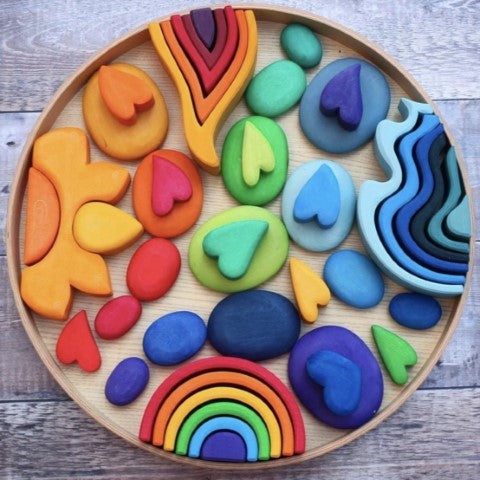
Within that openness, imagination begins to unfold. A handful of wooden blocks might become a village one day and a winding path the next. Loose parts shift and transform with each play session, shaped entirely by the child’s ideas. This open-ended approach encourages children to return again and again, deepening their play over time. Here, meaningful and intentional play begins to grow, guided not by the toy, but by the child’s inner world.
Natural Materials That Feel Good in the Hands
Waldorf-inspired toys are typically made from natural materials, offering both sensory richness and emotional depth. Wood, silk, wool, and cotton bring warmth, texture, and authenticity to a child’s experience. The grain of wood, the softness of silk drifting through the air, the comforting weight of a well-crafted object all invite connection rather than simple interaction.
Unlike plastic, which often feels uniform and impersonal, natural materials evolve over time. They soften, develop character, and quietly hold the stories of childhood. A silk cloth might become a river, a cape, a hiding place, and a bed for a favourite toy, all within a few days. These objects become familiar companions, woven into daily life.
Choosing natural materials also reflects a deeper care, offering children items that are safe, non-toxic, and sustainable. In doing so, we nurture not only the child, but also the world they are growing into, creating a gentle harmony between the two.

Child-Led Play, Gently Supported
At the core of Waldorf-inspired toys is a deep respect for the child and trust in their natural development. There are no instructions to follow and no expectations to meet, only the freedom to explore in a way that feels instinctive, guided by personal rhythms and interests.
What may appear simple from the outside is often rich with meaning. A child carefully arranging figures, building and rebuilding, or repeating an action is engaged in important inner work, developing concentration, processing experiences, and building understanding through repetition.
As children take the lead in their play, they begin to trust their ideas and gain confidence in their abilities. They learn that their creativity has value and that they are capable of shaping their own experiences. In this way, play becomes more than an activity. It becomes a deeply nourishing part of development, supporting emotional growth, independence, and a strong sense of self.

A Slower, More Meaningful Way to Play
Waldorf-inspired toys introduce a different rhythm into the home, one that feels calmer, slower, and more intentional. In contrast to highly stimulating toys that often lead to short bursts of engagement, these materials encourage children to linger, revisit, and deepen their play over time. A small, thoughtfully chosen collection of open-ended toys can offer far more than an abundance of single-purpose items. These toys grow alongside the child, adapting to new stages of development and new layers of imagination, so what begins as simple stacking can evolve naturally into storytelling, world-building, and creative expression.
Over time, these pieces become part of the fabric of childhood, familiar, comforting, and deeply valued. Rather than being quickly outgrown, they continue to offer new possibilities as the child develops. This slower approach to play often begins to shape the wider atmosphere of the home as well, encouraging calm, inviting a more mindful pace, and fostering a deeper appreciation for the small, meaningful moments of childhood. Play shifts from something that simply fills time to something that is protected and truly valued.
Choosing Waldorf-inspired toys is not about doing everything at once or creating a perfect environment. It is about making small, thoughtful choices, selecting toys that inspire imagination, materials that feel good to hold, and a rhythm that allows childhood to unfold naturally. From these beginnings, something quietly powerful begins to take shape, with deeper play, stronger connection, and a sense of calm that settles not only in the child, but throughout the home. Like tiny acorns given the right space and care, children grow and flourish in their own time, steady, confident, and rooted in wonder.
With warmth and wonder,
Mama Oak🍃
About the Author
Melody is the founder of Little Acorns to Mighty Oaks, a UK store specialising in Waldorf-inspired sustainable toys that encourage imaginative and open-ended play. With 13 years’ experience in early childhood education and as a mother who home educates her three children, Melody shares practical tips and insights about Waldorf toys, open-ended play, sustainable toys, child-led learning, and sustainable living. Read more about the founder here.


Leave a comment